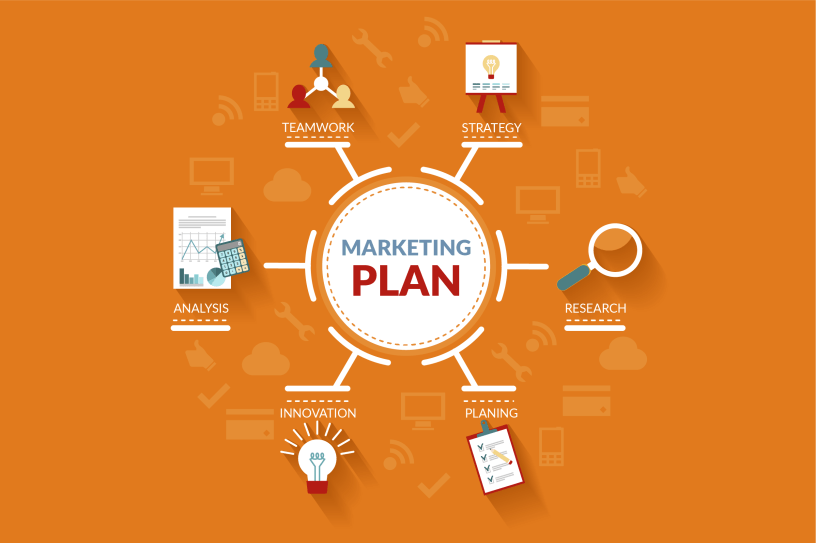
Creating a comprehensive marketing plan requires careful analysis, strategy development, and implementation. While I can provide you with an outline for a marketing plan, it’s important to note that the specifics will depend on your business, target audience, industry, and goals. Consider the following components when developing your marketing plan:
1.Executive Summary:
Brief overview of your business, its mission, and objectives.
Summary of the marketing goals and key strategies.
2.Situation Analysis:
Market analysis: Identify your target market, customer segments, and their needs. Analyze industry trends, competitors, and market size.
SWOT analysis: Assess your business’s strengths, weaknesses, opportunities, and threats.
Customer analysis: Understand your customers’ demographics, behaviors, preferences, and buying habits.
3.Marketing Objectives:
Clearly define specific, measurable, achievable, relevant, and time-bound (SMART) marketing objectives. Examples could include increasing market share, improving brand awareness, or generating more leads.
4.Target Market Segmentation:
Segment your target market into distinct groups based on demographics, psychographics, or behaviors. Tailor your marketing efforts to each segment’s unique characteristics and needs.
5.Positioning and Unique Selling Proposition (USP):
Define your brand’s unique value proposition and how it differentiates from competitors.
Identify the key benefits and attributes that resonate with your target audience.
6.Marketing Strategies:
- Product/Service Strategy: Define your product/service offerings, features, and benefits.
- Pricing Strategy: Determine pricing models, discounts, and promotions.
- Distribution Strategy: Outline the channels through which you will deliver your product/service.
- Promotion Strategy: Determine the promotional mix, including advertising, public relations, sales promotions, and digital marketing.
- Branding Strategy: Establish your brand identity, including logo, colors, messaging, and brand guidelines.
7.Marketing Tactics:
Break down your marketing strategies into specific actionable tactics.
Specify the marketing channels and platforms you will use, such as social media, email marketing, content marketing, search engine optimization (SEO), paid advertising, events, etc.
8.Budget and Resource Allocation:
Determine the budget required to execute your marketing plan.
Allocate resources for various marketing activities, including personnel, tools, advertising, and content creation.
9.Implementation:
Define a timeline with milestones and assign responsibilities to team members.
Set up a system to track and measure the effectiveness of your marketing efforts.
10.Monitoring and Evaluation:
Regularly monitor the performance of your marketing activities against defined metrics.
Adjust your strategies and tactics based on data-driven insights.
Review and evaluate the overall effectiveness of the marketing plan.
Extra-note
Remember, a marketing plan is a dynamic document that should be regularly reviewed and updated to reflect changes in the market, customer preferences, and business objectives. Adapt and refine your plan as needed to maximize results and stay ahead of the competition.
 EFINO BUSINESS