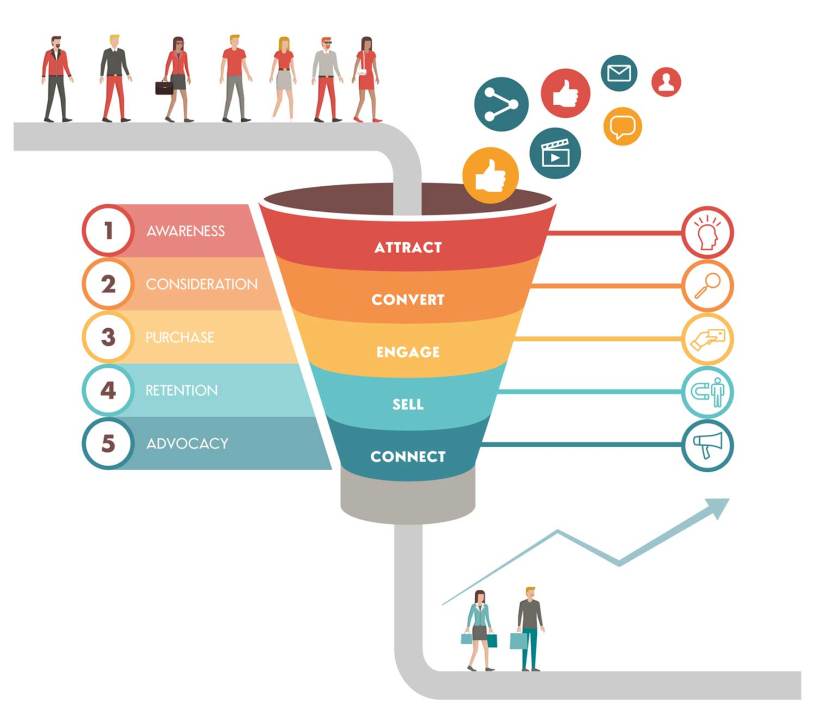
In today’s competitive business landscape, having a well-defined sales funnel is crucial for driving conversions and maximizing revenue. A sales funnel helps guide potential customers through a structured journey, from initial awareness to making a purchase. In this step-by-step guide, we will walk you through the process of creating a highly effective sales funnel for your business.
Step 1: Define Your Target Audience and Buyer Personas
Before constructing a sales funnel, it’s essential to have a clear understanding of your target audience. Identify their demographics, interests, pain points, and motivations. This information will help you tailor your funnel to effectively engage and convert your ideal customers.
Step 2: Create Awareness with Compelling Content
At the top of the sales funnel, your goal is to generate awareness and capture the attention of potential customers. Develop high-quality content that aligns with your target audience’s interests and pain points. Utilize blog posts, social media campaigns, videos, and other relevant content formats to attract and engage your audience.
Step 3: Offer a Valuable Lead Magnet
To entice potential customers to provide their contact information, create a valuable lead magnet. This could be an e-book, a whitepaper, a free webinar, or a discount coupon. The lead magnet should offer a solution to a specific problem your audience faces and demonstrate your expertise in the industry.
Step 4: Build an Email List and Nurture Leads
Once you have captured leads through your lead magnet, it’s important to nurture them through an email marketing campaign. Set up an email automation system to send targeted and personalized content to your leads. Provide valuable information, educational resources, and exclusive offers to build trust and keep your brand top of mind.
Step 5: Engage and Educate with Middle-of-Funnel Content
As leads progress through the sales funnel, they require more in-depth information to help them make an informed decision. Create middle-of-funnel content such as case studies, product demonstrations, comparison guides, or webinars. This content should address specific pain points and showcase the unique value proposition of your products or services.
Step 6: Convert Leads into Customers with a Compelling Offer
At the bottom of the funnel, it’s time to convert leads into paying customers. Create a compelling offer, such as a limited-time discount, a free trial, or a consultation session. This offer should incentivize leads to take the desired action and make a purchase.
Step 7: Implement Sales Funnel Tracking and Analysis
To optimize your sales funnel, it’s crucial to track and analyze its performance. Utilize analytics tools to monitor key metrics like conversion rates, click-through rates, and customer acquisition costs. Identify areas of improvement and make data-driven adjustments to enhance the effectiveness of your funnel.
Sales Funnel FAQs
1. What is the difference between a sales funnel and a marketing funnel?
A marketing funnel precedes a sales funnel. A marketing funnel is meant to draw visitors towards the brand and acquaint them with it. A sales funnel, on the other hand, is supposed to take unaware or partially aware audiences, and guide them towards an actual purchase.
2. Is a sales funnel a marketing activity?
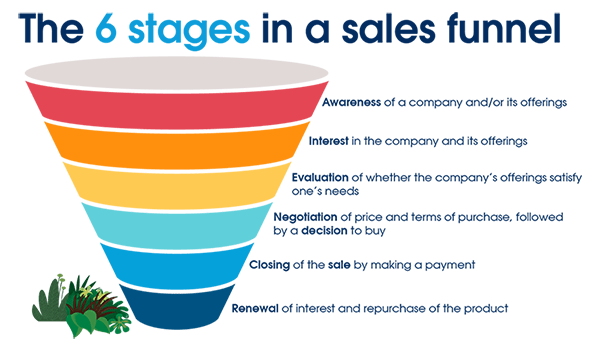
Yes and no. In the top levels of a sales funnel, the marketing team is heavily involved in converting visitors to leads and leads to prospects. In the middle, the sales team steps in to close the sale. At the bottom, the marketing team steps in again to hopefully renew existing customers’ interest in the company and its offerings.
3. Who needs a sales funnel?
Every company needs a sales funnel because every company has customers. A sales funnel is a useful tool for all companies, irrespective of their size or industry.
4. Do sales funnels really work?
If you take away the marketing jargon for a moment, you realise that a sales funnel is nothing more than an exercise in paying attention to your customer and their journey towards making a purchase. Since the customer is king, paying attention to them can only work in your favour. Moreover, by helping you optimise the use of your marketing resources, a sales funnel helps stretch your marketing dollar.
5. When do sales funnels not work?
A sales funnel may not work if it is poorly built and executed. Without a clear marketing goal, as well as proper targeting and compelling content, a sales funnel is unlikely to draw in enough prospects or keep them in the funnel.
6. What is sales funnel leakage?
Sales funnel leakage is when prospects and leads slip out of the funnel before they become paying customers. Sales funnel leakage usually happens if marketers can’t keep prospects and leads engaged with their company and offerings through relevant, interesting content and outreach.
Extra-note
Building an effective sales funnel is a continuous process that requires understanding your target audience, delivering valuable content, nurturing leads, and optimizing your approach based on data and insights. By following this step-by-step guide, you can create a powerful sales funnel that drives conversions, boosts revenue, and helps your business thrive in a competitive market.
 EFINO BUSINESS