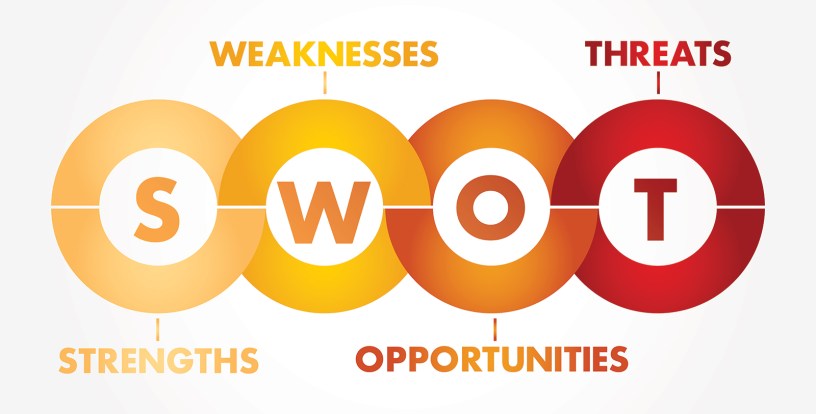
Market research often includes conducting a SWOT analysis to assess the internal and external factors that can impact a business or a specific market. SWOT stands for Strengths, Weaknesses, Opportunities, and Threats. This analysis helps organizations gain a comprehensive understanding of their current position and the factors that may affect their future success. Here’s how to conduct a SWOT analysis in the context of market research:
Strengths (S): Identify the internal factors that give your business or product an advantage over competitors in the market. Consider areas where you excel, have unique capabilities, or possess valuable resources. Some examples of strengths in market research might include:
- Established brand reputation.
- Access to proprietary data or technology.
- Skilled and experienced research team.
- Strong customer relationships.
- Efficient data collection and analysis processes.
Weaknesses (W): Examine the internal factors that put your business or product at a disadvantage compared to others in the market. These are areas where improvements are needed or where you face challenges. Examples of weaknesses in market research could include:
- Limited budget for research activities.
- Lack of in-house expertise in specific research methods.
- Data quality issues.
- Slow response times to market changes.
- Over-reliance on a single research source or methodology.
Opportunities (O): Identify external factors or market trends that present opportunities for your business. These are conditions or developments that you can leverage to your advantage. In market research, opportunities might include:
- A growing demand for specific types of research.
- Emerging market segments with unmet needs.
- Technological advancements that enhance data collection and analysis.
- Changing consumer preferences that open up new research niches.
- Market expansion possibilities, such as entering new geographic regions.
Threats (T): Consider external factors or market conditions that pose risks or challenges to your business. These are elements that can negatively impact your market research efforts. Threats in market research could encompass:
- Increased competition from other research firms.
- Regulatory changes affecting data privacy or research methodologies.
- Economic downturns impacting client budgets.
- Rapid technological advancements making existing methods obsolete.
- Shifts in consumer behavior or preferences that reduce the relevance of your research offerings.
Once you’ve identified these factors, it’s important to prioritize and analyze them. Develop strategies that build on your strengths, mitigate your weaknesses, capitalize on opportunities, and address threats. Your SWOT analysis can inform decision-making in various aspects of your market research, such as resource allocation, product development, marketing strategies, and risk management.
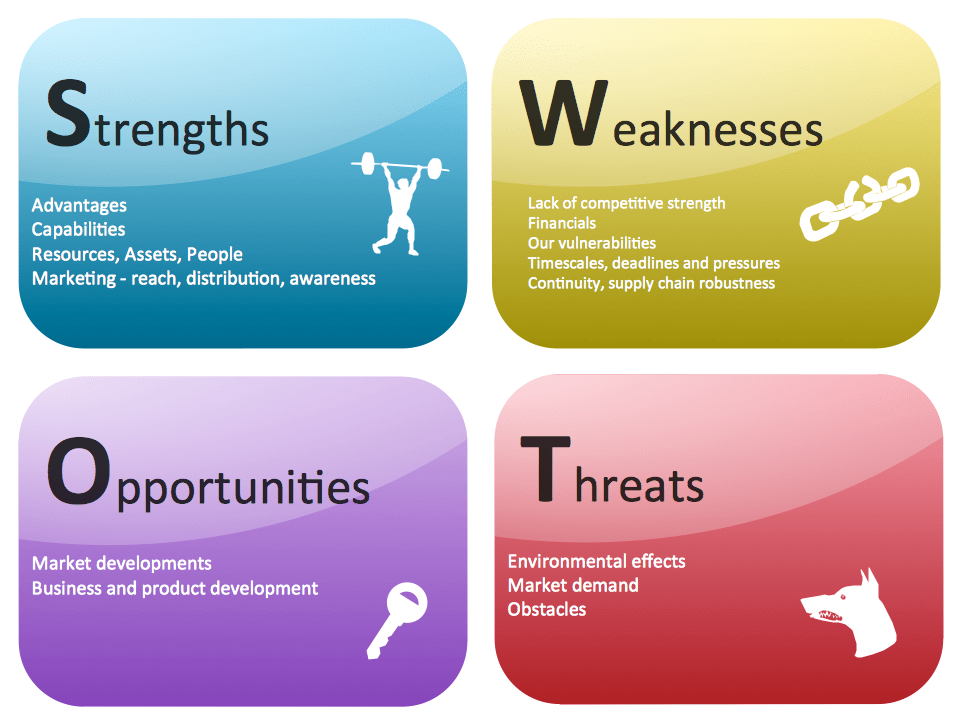
Remember that market conditions can change over time, so it’s beneficial to regularly revisit and update your SWOT analysis to ensure your strategies remain relevant and effective in the dynamic business environment.
 EFINO BUSINESS