
Setting clear and achievable business goals and objectives is crucial for guiding your business’s growth and success. Here’s a step-by-step guide to help you set effective business goals and objectives:
1. Understand Your Vision and Mission:
- Start by revisiting your business’s vision and mission statements. These provide the overarching purpose and direction for your business.
2. Identify Your Key Priorities:
- Determine the key areas or priorities that are crucial for your business’s success. These could include areas like revenue growth, customer satisfaction, market expansion, product development, cost management, or employee development.
3. Use the SMART Criteria:
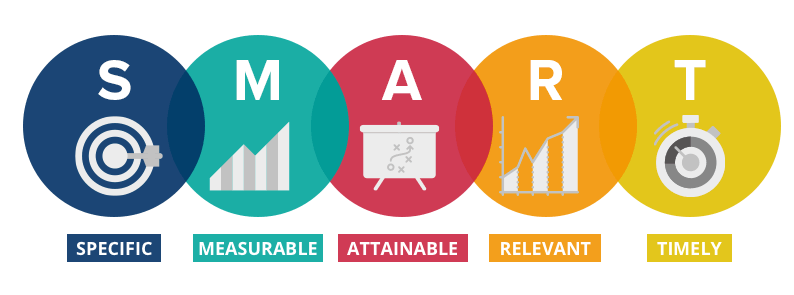
- SMART stands for Specific, Measurable, Achievable, Relevant, and Time-bound. Apply these criteria to your goals and objectives to ensure they are well-defined and realistic.
- Specific: Goals should be clear and specific, leaving no room for ambiguity.
- Measurable: Goals should include metrics or KPIs (Key Performance Indicators) to track progress.
- Achievable: Goals should be challenging but attainable with the resources and time available.
- Relevant: Goals should align with your business’s mission and overall strategy.
- Time-bound: Goals should have a deadline or timeframe for achievement.
4. Prioritize Goals:
- Not all goals can be pursued simultaneously. Prioritize your goals based on their importance and feasibility. Consider both short-term and long-term objectives.
5. Break Down Larger Goals:
- If you have larger, long-term goals, break them down into smaller, more manageable objectives. This makes them less overwhelming and easier to track progress.
6. Assign Responsibility:
- Specify who is responsible for each goal or objective. Accountability is essential for achieving your targets.
7. Set Key Performance Indicators (KPIs):
- Define specific KPIs or metrics that will be used to measure progress toward each goal. For example, if your goal is to increase online sales, a relevant KPI might be the monthly revenue from your e-commerce website.
8. Monitor Progress and Adjust:
- Regularly track your progress towards each goal. If you’re falling behind, take corrective actions or adjust your goals if necessary.
9. Communicate and Involve Your Team:
- Ensure that your team members are aware of the goals and objectives. Encourage their input and involvement in setting and achieving these goals. Aligning your team with your goals is essential for success.
10. Review and Revise Regularly:
- Goals and objectives should not be set in stone. As your business evolves and market conditions change, revisit and adjust your goals as needed. An annual or quarterly review is often a good practice.
11. Celebrate Achievements:
- When you reach a milestone or achieve a goal, celebrate the success with your team. Recognizing achievements can boost morale and motivation.
Remember that setting business goals and objectives is an ongoing process. It requires careful planning, regular review, and adaptation to changing circumstances. By following these steps, you can create a roadmap for your business’s growth and success.
 EFINO BUSINESS