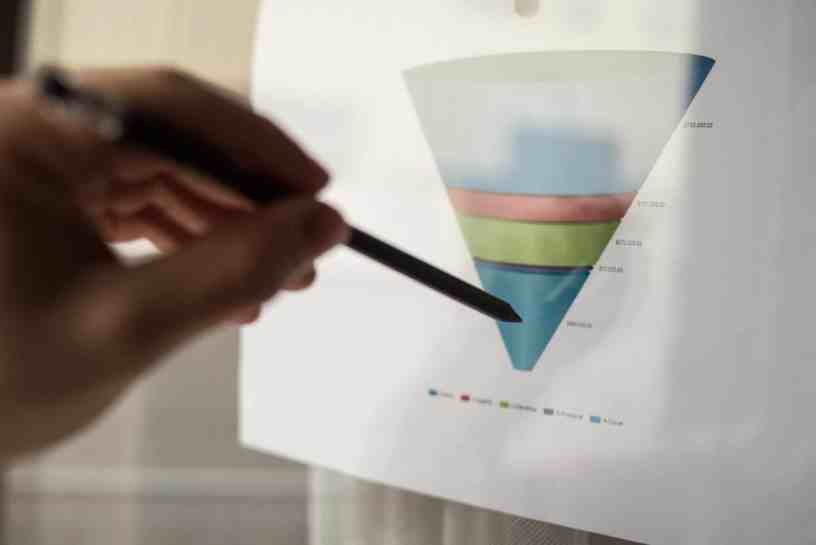
Building an effective sales funnel is crucial for any business looking to drive consistent sales growth. But creating a sales funnel is only the first step. To truly optimize your funnel and maximize its performance, you need to measure and analyze key metrics at each stage. By tracking these metrics, you gain valuable insights into your sales process, identify areas for improvement, and make data-driven decisions to boost conversions. In this blog post, we will explore the key metrics you should track when measuring and analyzing your sales funnel.
1.Conversion Rate
The conversion rate is one of the most important metrics to track in your sales funnel. It measures the percentage of leads or prospects who successfully move from one stage to the next. By monitoring conversion rates at each stage, you can identify areas where leads are dropping off and take action to improve conversion rates. For example, if your conversion rate from lead to customer is low, you may need to reevaluate your lead nurturing strategies or qualification criteria.
2.Time to Conversion
Time to conversion refers to the average length of time it takes for a lead to progress through your sales funnel and become a customer. Tracking this metric helps you understand the efficiency of your sales process. If leads are taking too long to convert, it may indicate bottlenecks or inefficiencies that need to be addressed. Shortening the time to conversion can lead to faster revenue generation and improved customer satisfaction.
3.Cost of Customer Acquisition (CAC)
Calculating the cost of customer acquisition allows you to determine how much you’re spending to acquire each new customer. By dividing your marketing and sales expenses by the number of customers acquired within a specific period, you can measure the effectiveness and efficiency of your marketing and sales efforts. Monitoring CAC helps you evaluate the return on investment (ROI) of your sales funnel and make informed decisions about resource allocation.
4.Average Deal Size
The average deal size measures the average value of each sale closed within your sales funnel. Tracking this metric helps you assess the profitability of your sales process. Increasing the average deal size can significantly impact your revenue. By focusing on upselling, cross-selling, or targeting higher-value customers, you can drive higher average deal sizes and maximize your sales funnel’s potential.
5.Sales Velocity
Sales velocity measures the speed at which leads move through your sales funnel. It considers both the conversion rate and the deal size to calculate how quickly revenue is generated. Monitoring sales velocity helps you identify potential roadblocks or delays in your sales process and take corrective actions to speed up revenue generation. Increasing sales velocity can have a direct impact on your business’s cash flow and overall growth.
6.Funnel Drop-Off Points
Identifying drop-off points in your sales funnel is essential to understanding where leads are exiting the process. By analyzing the conversion rates between each stage, you can pinpoint specific areas where leads are not progressing as expected. This insight allows you to address any barriers or challenges that prevent leads from moving forward and optimize those stages to minimize drop-offs.
7.Customer Lifetime Value (CLV)
Customer lifetime value represents the total revenue a customer is expected to generate throughout their relationship with your business. Tracking CLV helps you assess the long-term profitability of your sales funnel and the value of acquiring and retaining customers. By focusing on increasing CLV, such as through upselling, cross-selling, or improving customer retention strategies, you can maximize the revenue potential of each customer.
8.Return on Investment (ROI)
ROI measures the financial return generated from your sales and marketing investments. It compares the revenue generated to the cost of acquiring and servicing customers. Tracking ROI allows you to evaluate the effectiveness of your sales funnel as a whole and make informed decisions about resource allocation. By analyzing the ROI of different marketing and sales channels, you can optimize your budget and invest in the most profitable strategies.
Extra-note
Measuring and analyzing key metrics in your sales funnel is crucial for optimizing its performance and driving consistent sales growth. By tracking conversion rates, time to conversion, CAC, average deal size, sales velocity, funnel drop-off points, CLV, and ROI, you gain valuable insights into your sales process and can identify areas for improvement. Remember, continuous monitoring and analysis of these metrics allow you to make data-driven decisions, refine your strategies, and achieve better results in your sales funnel.
 EFINO BUSINESS